
A Saint John’s Bonfire on the Grand Canal
Venice had everything against it. A city raised on mud and water, built to attract the whole world, and yet for centuries you could not set foot in it unless you were invited. Today millions of us cross its bridges, and every one of them is proof that the formula still works: a human effort to create and move forward, to trade and to live with art, still running long after the people who invented it were gone. And in that city there is a house with its door open onto the Grand Canal, one of those places you never forget.
The Peggy Guggenheim Collection is one of my favourite collections in the world. It is beautiful, it is lived in, it oozes life. Nothing in it feels like a trophy: it is a deeply personal selection, made by a woman who bought art while living alongside the artists, and you can feel that genuine commitment in every room. It has truth.
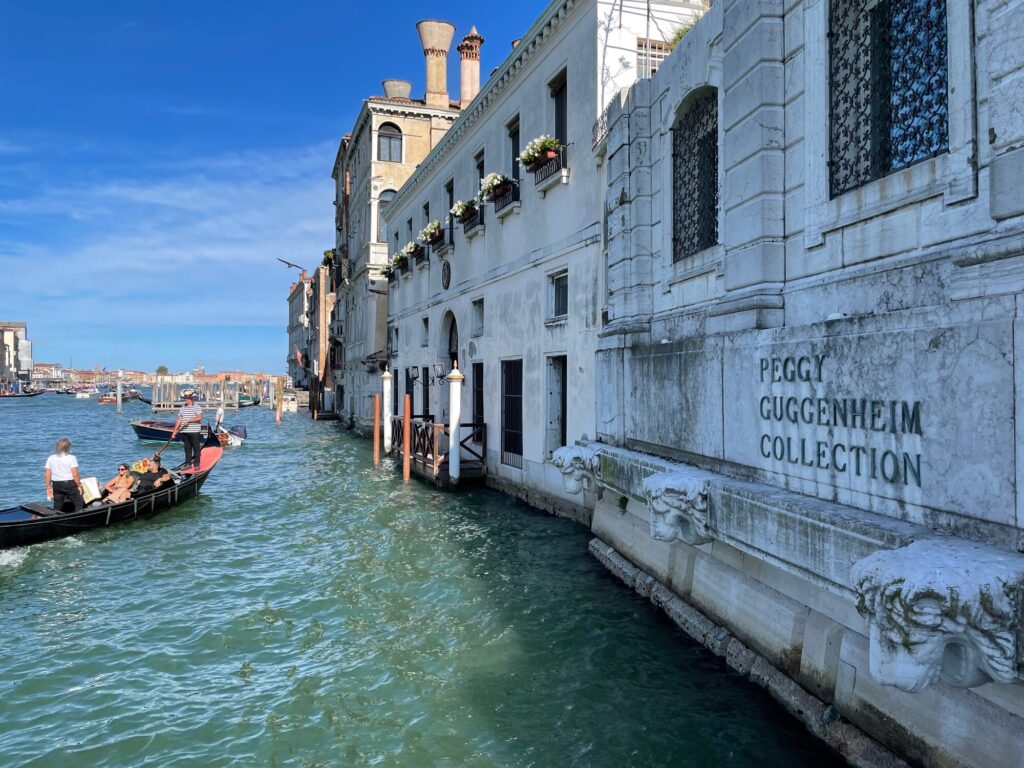
I spent many hours in that house, in its garden, on its benches. For an afternoon I felt like a collector, and I understood something about the way I work. My way of curating is to live the works: to play the role, to let myself be charmed, to slip into the skin or onto the canvas. To look at the brushstrokes, yes, but above all to inhabit the space, a space that still smells of tobacco smoke and nights of wine. I don’t bore anyone with techniques and dates. For me there is a kind of sympathetic magic at work: I read a painting the way early humans read the drawings on the walls of their caves. Where there is a bison painted in red earth and charcoal, and a few figures holding spears, I feel the ecstasy of the hunt, the hunger and the need of the night before. Happiness in the waiting room of happiness.
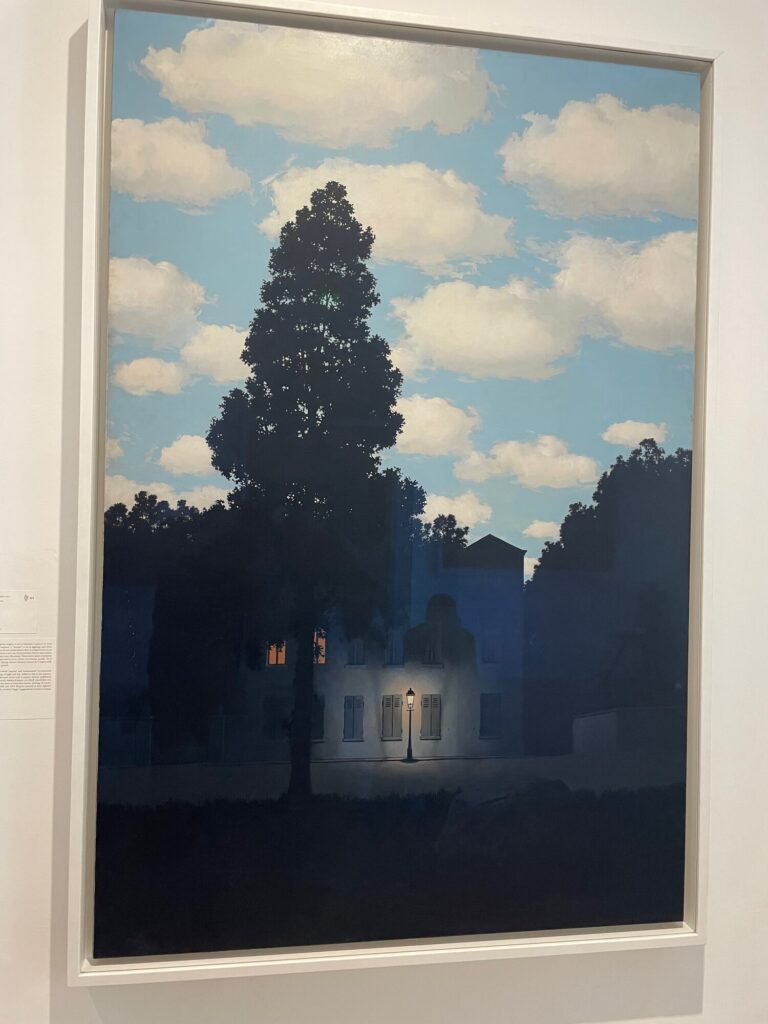
That is how I stood, once again, in front of René Magritte’s Empire of Light. It has fascinated me since my years at art school, and seeing it in person only deepened the spell: a clear twilight sky above a dark grove, and a house with a single lamp lit. I always want to go there. I am always curious. And yet something holds me back, something tells me it is not my place, and I stay where I am, watching the light on the façade like a moth. Surrounded by so many artists, my eyes already dulled with beauty, that house still unsettled me.
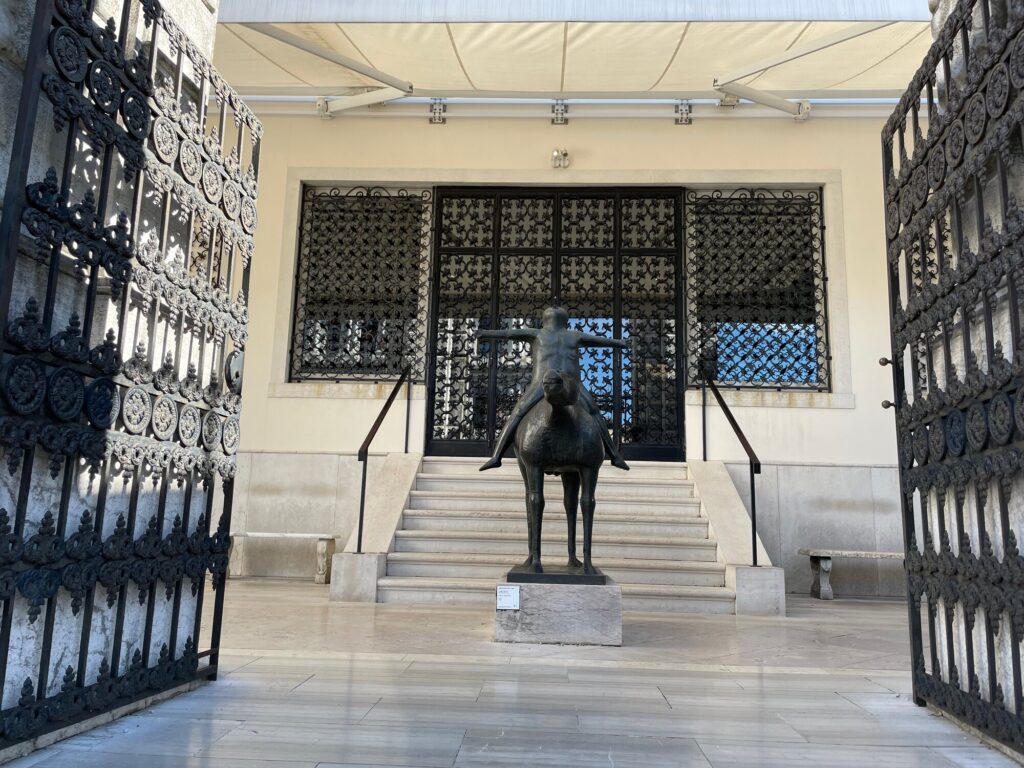
A few rooms on, I was glad to find one of my favourite Basques, Eduardo Chillida, so honest, so rotund, so clear in what he proposes. There is something rocky about him, something of the north, of harsh weather and strong hands, and in the floating city his work looked like the mooring posts of a Basque harbour. My favourite was Meeting Place I, though every piece on show was beautiful, and the title suits it: a meeting place, somewhere to moor the immense joy I feel in front of the star of the house. Because the star is out by the water. Marino Marini’s The Angel of the City sits astride his horse at the gate, arms flung open to the Grand Canal, right where Peggy placed him. When I close my eyes and try to remember the collection, that is what comes back first: that face of pure joy, and his erect penis pointing at the water.
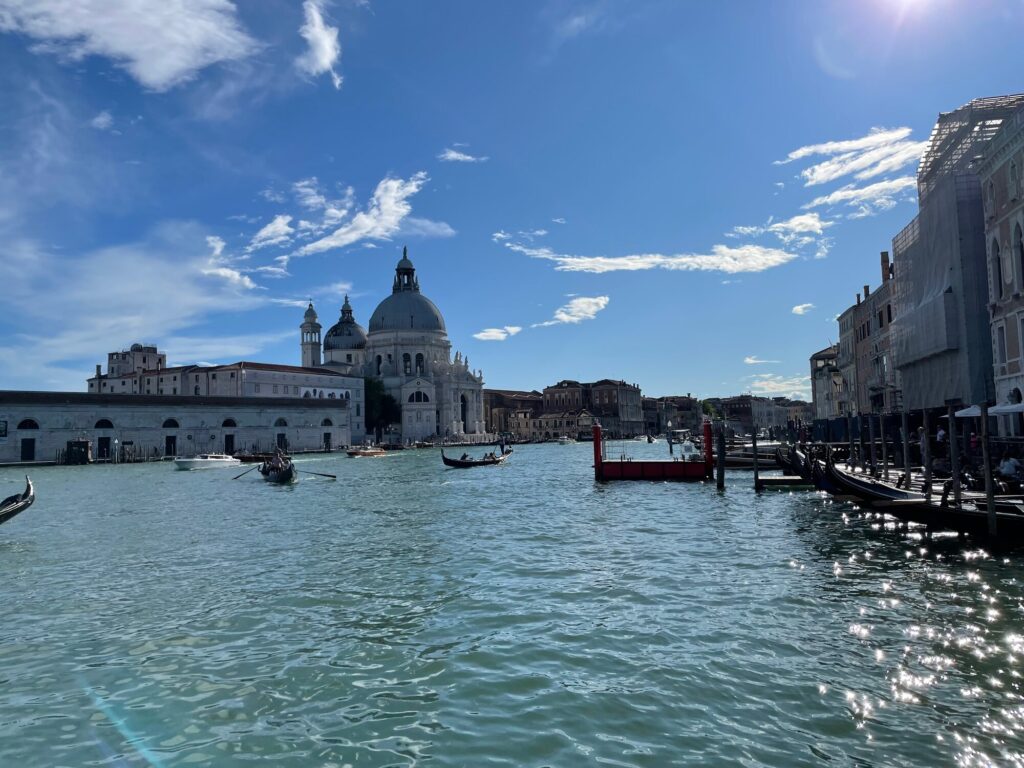
That is what stays with me. A collection of motley gazes, a beautiful Saint John’s bonfire in which the genius of everyone who left their creativity there is still crackling.
Photographs: Samuel Casavella, Peggy Guggenheim Collection, Venice, August 2025.
Wherever you are, if a work has caught your eye, or you would like my view on a piece you own or are thinking about, write to me. I will be glad to look at it with you.